
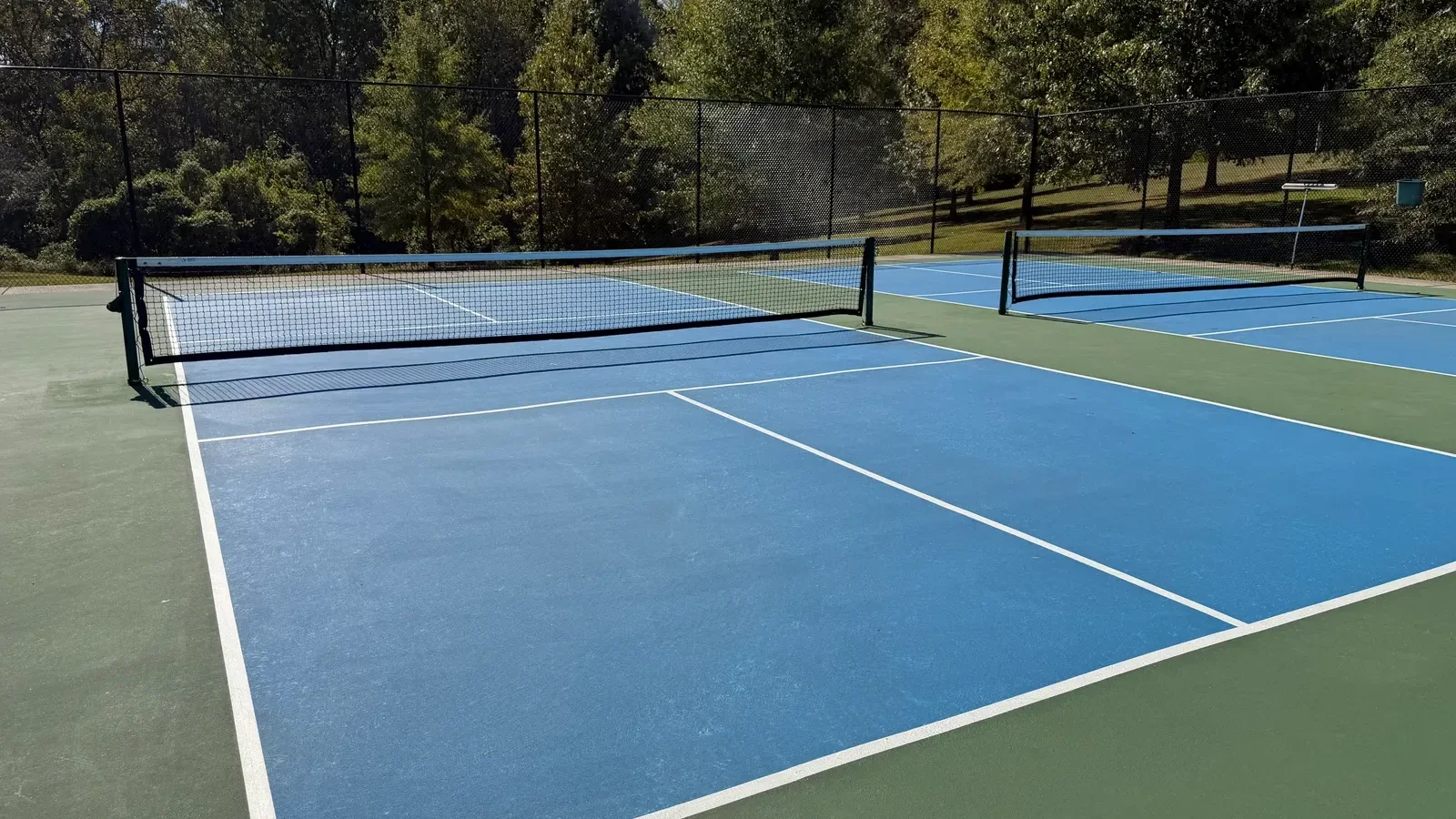
Open play is how most people get into pickleball. There's no team to join and no partner to find. You show up at a court or gym during a set time, add your paddle to the line, and play doubles with whoever is up next. Games are short, partners change all the time, and by the end of a session you have usually played with most of the people there.
If you have never been, it can feel like walking into a party where everyone already knows each other. It gets easier fast. Here's what to expect, what to bring, and how to find a session that fits your level.
What open play actually is
Open play is a block of time when a venue sets courts aside for drop-in games. A rec center might run it on weekday mornings. A park might have regulars who show up at 6 pm when the lights come on. A club might run evening sessions split by level.
The format is almost always doubles, with games to 11 (win by 2). After each game, all four players come off and the next group goes on. Nobody "owns" a court, and you are not expected to bring your own partner.
Some sessions charge a small drop-in fee or need a membership; outdoor park courts are often free. On Vara Performance, each session row shows the cost note and whether it's indoor or outdoor where the venue tells us, and if the session doesn't say, you see the venue's own details instead, such as Free, Membership or Pay per visit.
How to find a session near you
Start at Open play near you. Set your area once and the page shows sessions in the next 7 days within 30 miles, grouped by day, with the time, the venue, the level and how far away it is. You can switch between a list and a map.
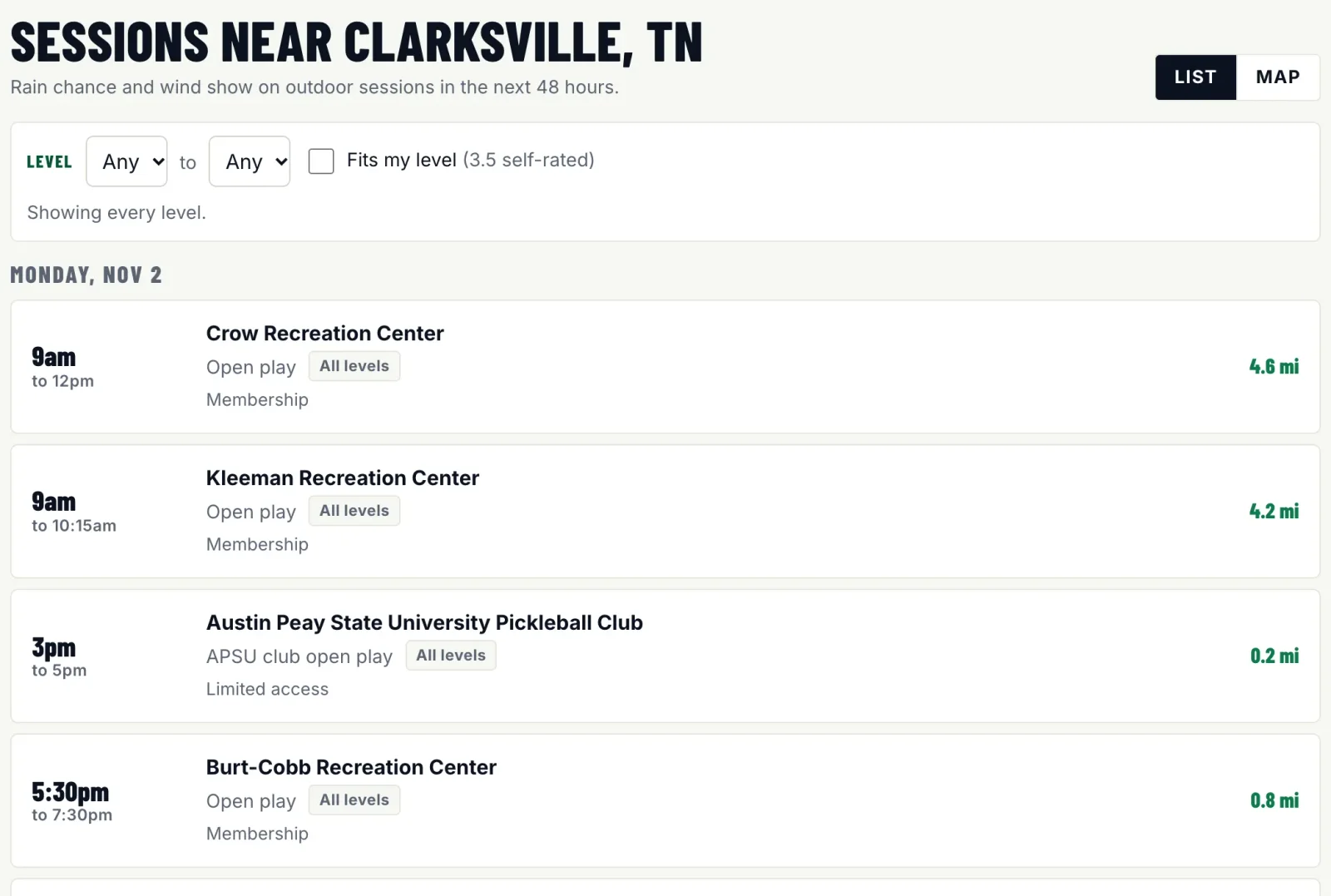
A few things worth knowing on that page:
- Level badges. A session with its own level range shows it. If the organizer didn't set one but people have RSVPed, the badge shows the range of the players going (for example, Players 3.0 to 4.0). Otherwise it says All levels. Use the From level and To level filters, or tap Fits my level once you've set yours.
- Cancellations stay listed. If a venue cancels a session, it stays on the list marked Cancelled with the reason, so you don't drive to a locked gym.
- One city at a time. Every city has its own open play page at
/courts/in/<state>/<city>/open-play, which you can subscribe to in Apple Calendar, Outlook or Google Calendar so new sessions show up on their own.
If a session is near you but you aren't sure what it's like, open the court's page. It lists what we know about the courts (count, lights, surface, how to reserve) and the full two-week schedule.
RSVP so people know you're coming
You don't have to RSVP to play, but it helps. Tap Going on a session, or Maybe if you aren't sure. The row then shows how many people are going and their level range, which tells you a lot about what the session will be like.
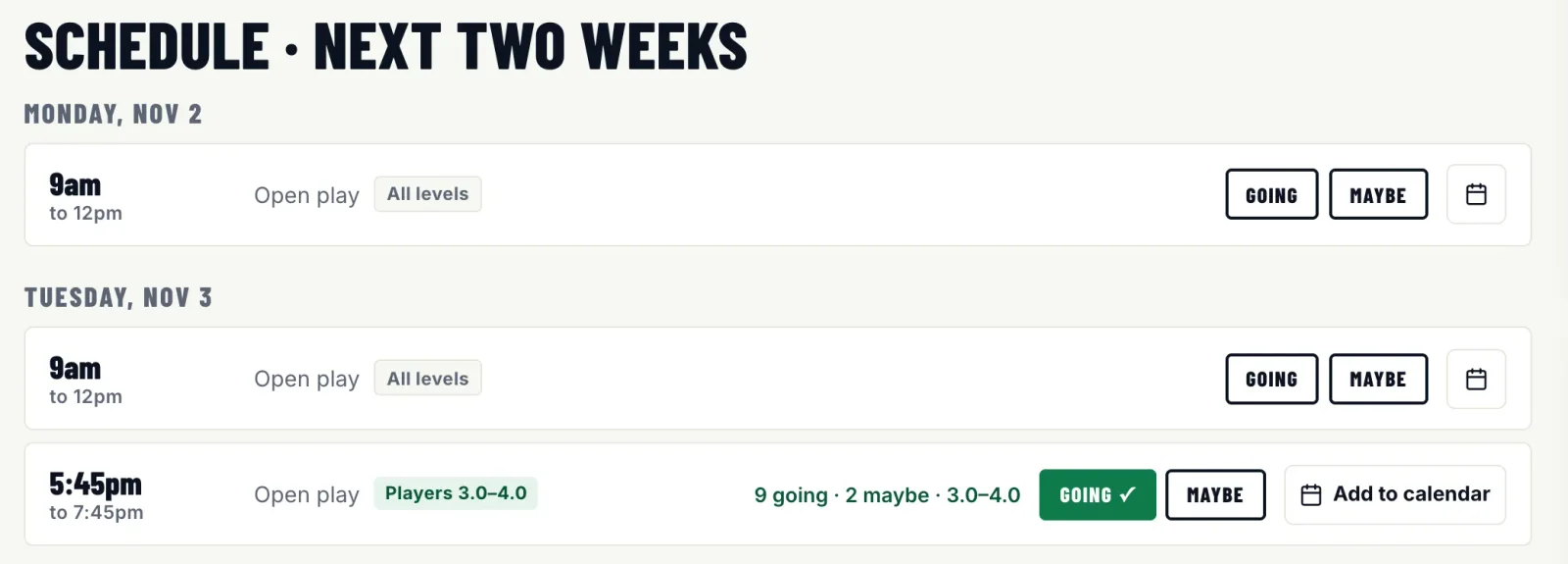
If the organizer has set a player limit and the session fills, the Going button becomes Join waitlist. When someone drops out, the first person on the waitlist moves up automatically and gets a notification. We'll remind you about 2 hours before any session you're going to, and if the session is cancelled, everyone who RSVPed is told. You can RSVP up to 28 days ahead.
RSVPs need a free account with a verified email. Only your friends see your name in the count; everyone else sees a number.
What to bring
You need less than you think:
- A paddle. If you don't own one, ask. Regulars often have a spare, and some rec centers lend them.
- Court shoes. Tennis or court shoes grip the surface and support side-to-side movement. Running shoes are the most common cause of rolled ankles.
- Water. Even indoor sessions get warm.
- Balls are usually provided. Outdoor courts use a harder ball with smaller holes than indoor ones. If you bring your own, bring the right type.
Arrive 10 minutes early. Pay the drop-in or show your membership if there is one, and tell someone it's your first time. People are almost always happy to explain how their session runs.
How the paddle rack works
Most open play runs on a paddle rack, or something like it. Paddles wait in a line by the courts. When a court frees up, the first four paddles take it. After the game, all four players put their paddles back at the end of the line.
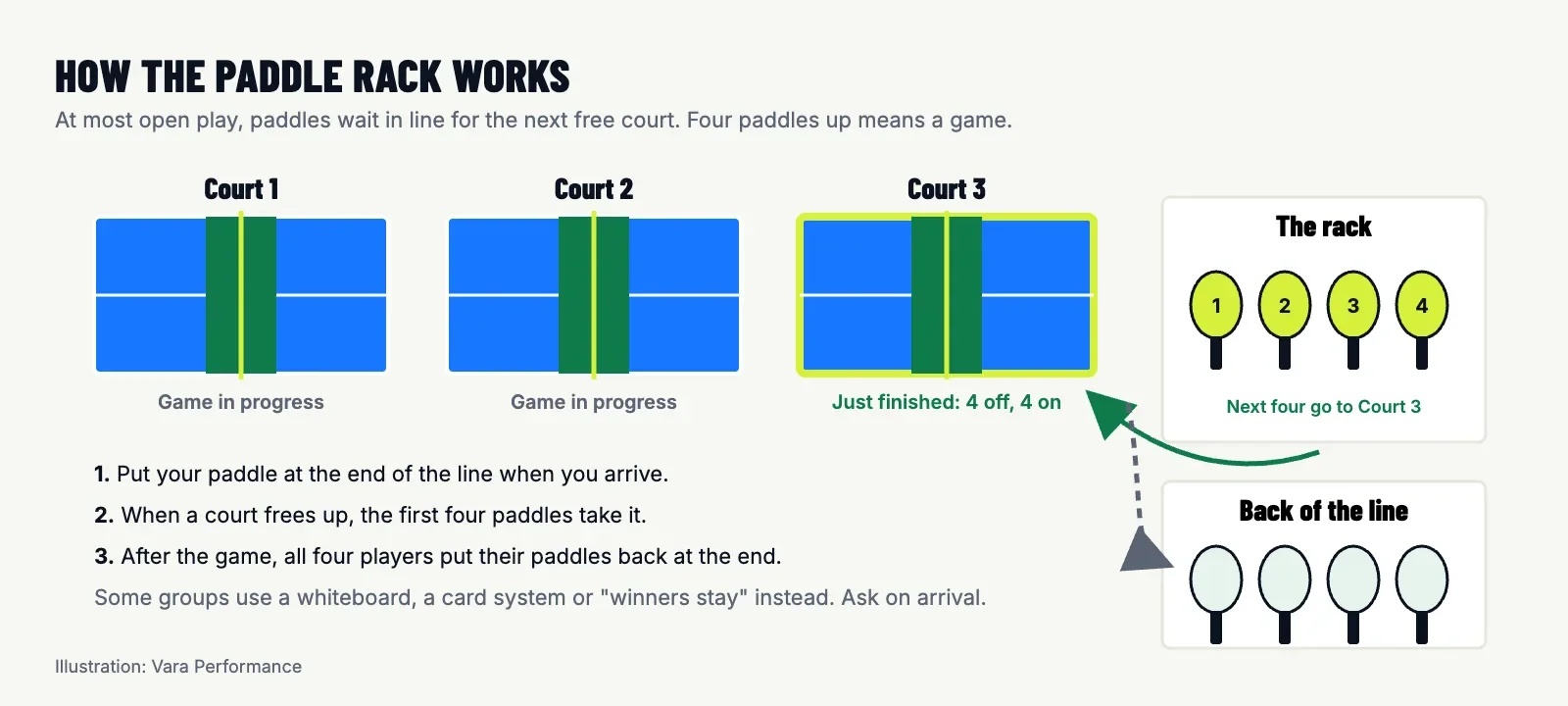
Some groups use a whiteboard, numbered cards or a "winners stay" rule instead. A growing number use a live queue on their phones: on Vara Performance, the host starts a queue, you tap Join the queue from a link or QR code, and the app tells you which court you're on when it's your turn. If you walk up and see a banner saying "Open play is live: join the queue" on the court's page, that's what it is.
Whatever the system, the rule is the same: wait your turn, and when your game ends, come off promptly so the next group can go on.
Playing your first games
You'll be fine if you know the basics: the serve is underhand, the serve and the return must each bounce before anyone volleys, and you can't volley while standing in the kitchen (the 7-foot zone on each side of the net). Doubles scores are called as three numbers, like 0-0-2. If you need a refresher, our 10-minute guide to the rules covers everything you need for a first session.
A few habits make you an easy person to play with:
- Call the score before you serve. Out loud, every time.
- Call lines on your side only, and only when you're sure. If you aren't sure, it's in.
- Say if you're new. Partners adjust, and nobody minds a learner who is trying.
- Mix in. Play with whoever is next, not just the people you came with.
If the session has a level range and you're below it, that's useful information, not a rule you'll get thrown out for breaking. Next time, try a session marked All levels or a lower range, and come back when you're ready.
Checking in at the courts
Every court page has a "Playing here now?" card. Tap I'm here when you arrive and others can see that people are playing, along with the group's average level. A check-in lasts 2 hours or until you check out. It uses your location once to confirm you're at the courts, or you can check in without location and show as unconfirmed.
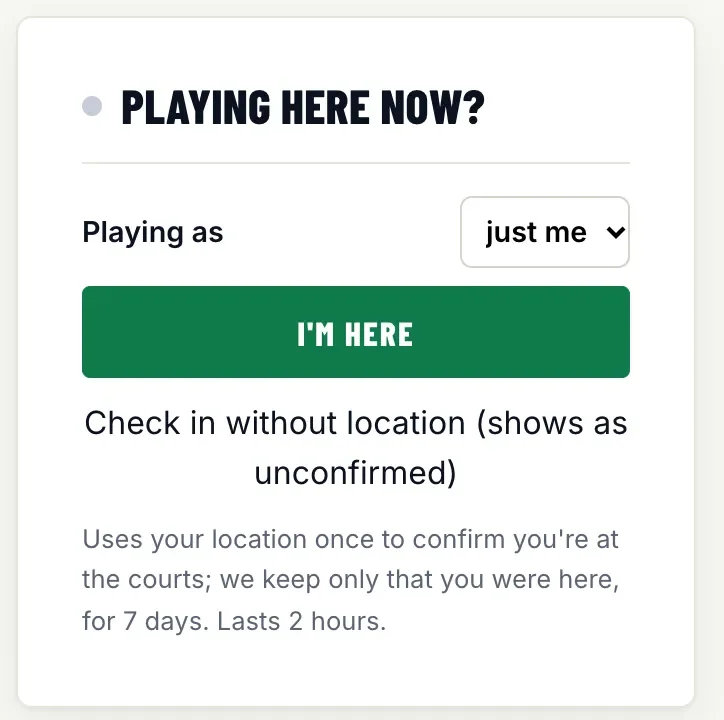
Your name only shows to friends, unless you choose otherwise in your privacy settings.
After your first session
If you enjoyed it, the next steps are simple:
- Set your level on your profile, so the Fits my level filter works for you.
- Try a round robin. It's open play with a schedule: rotating partners, courts assigned for you, and standings at the end. Look for "Round robins you can join" on Open play near you.
- Short a player one day? Post a Need a 4th from the court's page and nearby players at your level hear about it.
Open play is meant to be easy to drop into. Find a session this week, tap Going, and bring a paddle.